Unraveling Overlaps in Privacy Rules and Transaction Conditions Across English-French Casino Documentation
Kai Lange · Aug 19, 2026
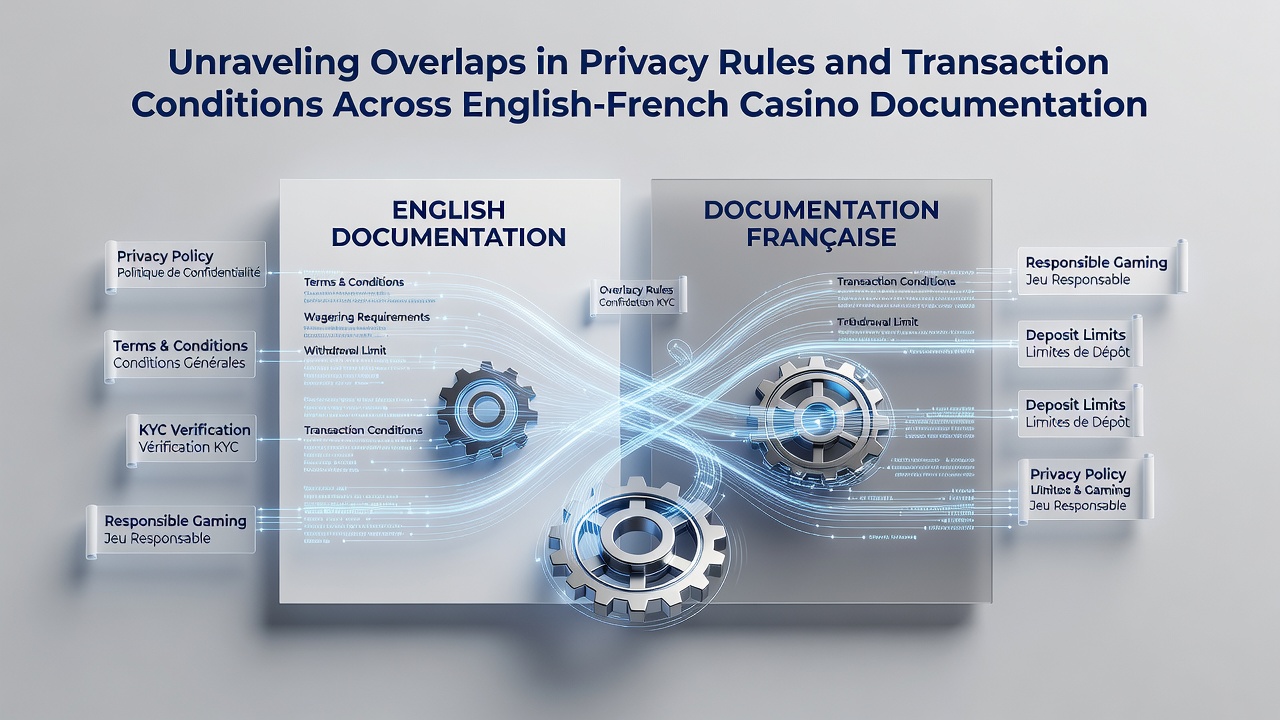
Unraveling Overlaps in Privacy Rules and Transaction Conditions Across English-French Casino Documentation
Operators who manage casino platforms in regions where English and French hold equal legal weight often face intricate overlaps when privacy rules intersect with transaction conditions, and those overlaps appear in both language versions of the same documents.
Mapping the Core Regulatory Frameworks
Privacy legislation such as the Personal Information Protection and Electronic Documents Act in Canada and the data protection standards enforced by the Commission Nationale de l'Informatique et des Libertés in France set distinct yet sometimes parallel requirements for how user data gets collected, stored, and shared during account creation and financial transfers, while transaction conditions cover payment processing, withdrawal timelines, and anti-money laundering checks that rely on the same data sets.
Researchers who compared sample English and French casino agreements discovered that a clause permitting data transfer to payment processors in one language version sometimes omitted the explicit consent language required in the other, which created potential gaps when regulators reviewed cross-border activity.
How Translation Choices Create Overlaps
Terms that describe “personal information” in English may translate into phrases that align more closely with “données personnelles” under French standards, and those wording shifts can expand or narrow the scope of what counts as protected data during deposit and withdrawal sequences. Observers note that transaction conditions frequently reference privacy consents, so a mismatch in one section ripples through the entire payment workflow described in the documentation.
Studies from academic institutions tracking bilingual legal texts show that such overlaps intensified after 2023 when several platforms expanded services into Quebec and French-speaking European markets simultaneously, forcing compliance teams to reconcile two sets of expectations within single documents.
August 2026 Regulatory Adjustments
Beginning in August 2026, certain harmonization measures scheduled by Canadian and French authorities will require clearer alignment on data retention periods tied to financial transactions, and casino operators have started updating their bilingual materials to reflect those forthcoming changes ahead of the deadline.
Figures released by industry monitoring groups indicate that platforms serving both languages have already revised roughly 40 percent of their transaction-related privacy statements to meet the upcoming standards, with the remaining updates focused on consent mechanisms that appear in both English and French versions.
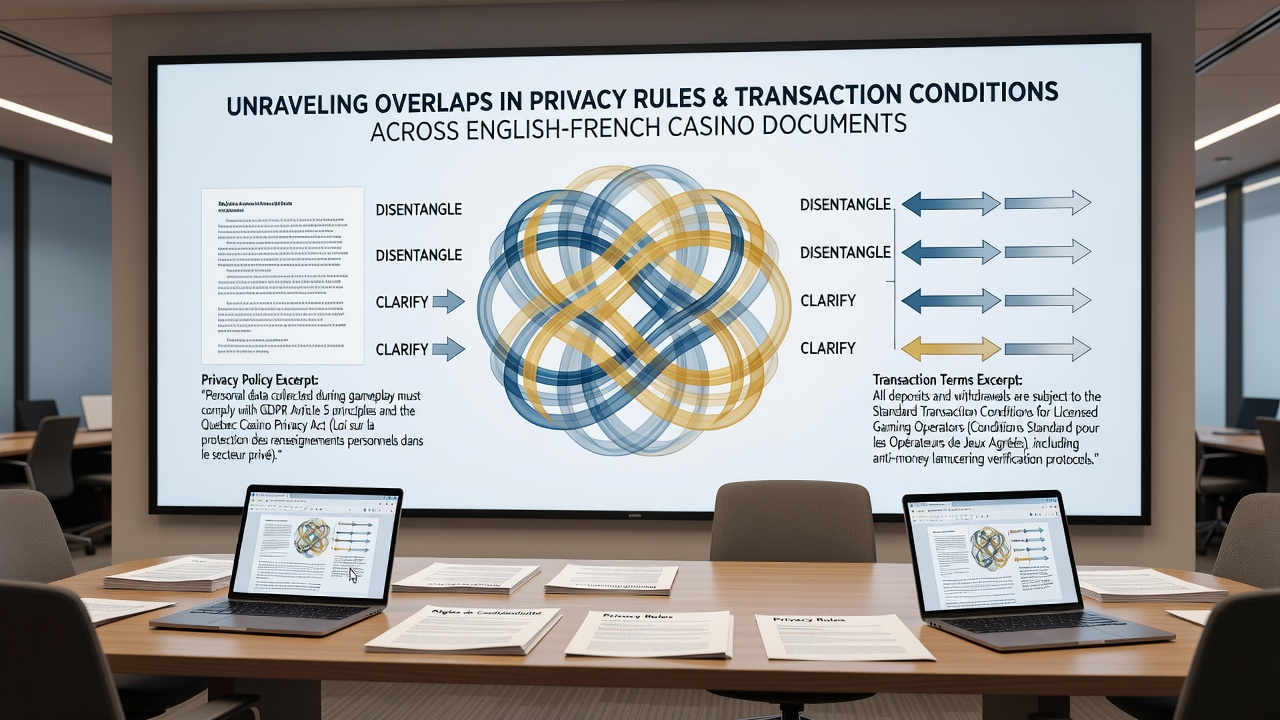
Practical Examples from Platform Documentation
One operator that launched a bilingual site in 2024 encountered scrutiny when its French transaction conditions referenced a 30-day data retention window while the English version listed 90 days for the same payment records, prompting a full audit that traced the discrepancy to differing interpretations of anti-fraud reporting obligations. Experts who reviewed the case found that the overlap stemmed from separate legal teams drafting each language version without a joint reconciliation step.
Another example involves loyalty program data used for personalized bonuses, where privacy rules in one language version required opt-in consent while transaction conditions in the other language assumed implied consent through account activity, and regulators flagged the inconsistency during routine compliance checks.
Methods Operators Use to Reduce Conflicts
Teams that maintain bilingual casino documentation now employ side-by-side comparison tools and legal glossaries tailored to gambling terminology, which allows them to spot overlaps before publication rather than after regulatory review. Data from compliance software providers shows that such paired reviews cut revision cycles by nearly half compared with sequential translation approaches.
Industry associations in both Canada and France have begun publishing joint guidance notes that highlight recurring overlap patterns, and operators who follow those notes report fewer discrepancies in sections that link privacy consents directly to transaction processing steps.
Conclusion
Overlaps between privacy rules and transaction conditions in English-French casino documentation arise from translation nuances, differing regulatory timelines, and the interconnected nature of user data used for both identification and payments, yet structured reconciliation processes and upcoming 2026 adjustments offer clearer pathways for consistent bilingual presentation. Platforms that address these intersections early maintain smoother compliance across jurisdictions while keeping documentation aligned in both languages.